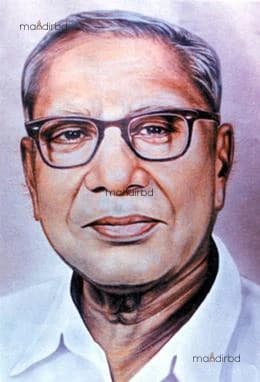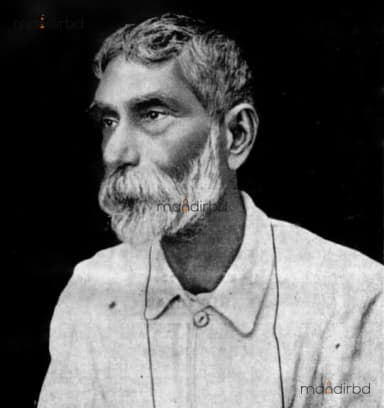
Acharya Prafulla Chandra Ray
(প্রফুল্ল চন্দ্র রায়)
Biography
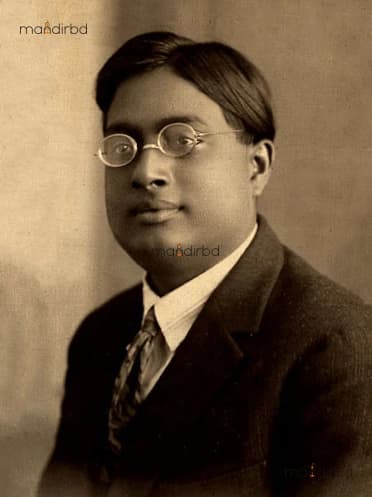
INTRODUCTION: Acharya Prafulla Chandra Ray, widely regarded as the Father of Indian Chemistry, was a pioneering scientist, a dedicated educationist, a visionary industrialist, a passionate social reformer, and a profound humanist. Born on August 2, 1861, in the village of Raruli-Katipara in the Khulna district of undivided Bengal (now in Bangladesh), he dedicated his entire life to the advancement of scientific research, the industrial self-reliance of India, and the upliftment of the downtrodden. His legacy is defined by his groundbreaking discovery of mercurous nitrite, his monumental research into the history of ancient Indian science, and his founding of Bengal Chemicals and Pharmaceuticals, which was India's first indigenous pharmaceutical company. Through his life and work, Acharya Prafulla Chandra Ray demonstrated how scientific knowledge could be harnessed for national development and social welfare. EARLY LIFE AND ANCESTRY: Prafulla Chandra was born into a progressive and wealthy family. His father, Harish Chandra Ray, was a local landlord (zamindar) who was highly educated, fluent in Arabic, Persian, and English, and possessed a modern, liberal outlook. His mother, Bhubanmohini Devi, was also an enlightened woman of her time, known for her benevolence and progressive views on education. Growing up in an intellectually stimulating household, young Prafulla developed an early love for reading and learning. He began his formal education at the village school established by his father. In 1870, the family relocated to Calcutta (now Kolkata) to provide the children with better educational opportunities. Prafulla was admitted to the prestigious Hare School. However, in 1874, a severe attack of dysentery forced him to suspend his formal schooling and return to his village to recuperate. This period of physical illness proved to be a turning point in his life. Confined to his home, he read extensively from his father's vast library, mastering English literature, history, geography, and classical languages like Latin and Greek. This self-directed study laid a solid foundation for his future intellectual pursuits. ACADEMIC PURSUITS AND EUROPEAN EDUCATION: Upon recovering his health, Prafulla Chandra returned to Calcutta and joined the Albert School, from where he passed the Entrance Examination in 1879. He then enrolled at the Metropolitan Institution (now Vidyasagar College), which had been established by the great social reformer Pandit Ishwar Chandra Vidyasagar. At the Metropolitan Institution, he was deeply influenced by the lectures of Surendranath Banerjee, a prominent leader of the Indian national movement. Although his primary subjects were literature and history, Ray also attended chemistry lectures at Presidency College as an external student. It was here, under the inspiring guidance of Professor Alexander Pedler, that his passion for chemistry was ignited. In 1882, Ray competed for and won the prestigious Gilchrist Scholarship, which allowed him to travel to the United Kingdom for higher studies. He enrolled at the University of Edinburgh, where he studied chemistry, physics, and other natural sciences. He obtained his Bachelor of Science (B.Sc.) degree in 1885 and went on to complete his Doctor of Science (D.Sc.) in 1887. His doctoral thesis, which focused on the chemistry of inorganic sulfates, was highly acclaimed by the academic community, and he was awarded the Hope Prize, which enabled him to continue his research at Edinburgh for another year. PIONEERING RESEARCH AND SCIENTIFIC DISCOVERIES: Dr. P. C. Ray returned to India in 1889 and was appointed as a temporary Assistant Professor of Chemistry at Presidency College, Calcutta. Despite his outstanding academic credentials from a premier European university, colonial discrimination restricted his promotion to higher administrative ranks within the education department. Undeterred by these systemic barriers, Ray focused his energy on establishing a world-class research laboratory at Presidency College. In 1896, he made a groundbreaking discovery that brought him international recognition: the synthesis of Mercurous Nitrite. At the time, mercurous nitrite was believed to be highly unstable and impossible to isolate. Ray's successful synthesis of this compound opened up a new field of research in inorganic chemistry. Over the next few decades, he and his students published over a hundred research papers on various chemical compounds, particularly nitrites and hyponitrites of different metals. His laboratory became the nucleus of the first modern Indian research school in chemistry, attracting brilliant young minds from all over the country. THE HISTORY OF HINDU CHEMISTRY: Beyond his experimental work in the laboratory, Acharya P. C. Ray was deeply interested in the history of science. He dedicated years of meticulous research to translating ancient Sanskrit texts and analyzing historical manuscripts to document the scientific achievements of ancient India. This culminated in his monumental two-volume work, 'A History of Hindu Chemistry from the Earliest Times to the Middle of the Sixteenth Century A.D.', published in 1902 and 1909. Through this work, Ray scientifically demonstrated that ancient Indian scholars had advanced knowledge of metallurgy, medicine, and chemistry long before these concepts emerged in the Western world. This publication restored national pride and self-confidence among Indian intellectuals during the height of British colonial rule. INDUSTRIAL VISION AND BENGAL CHEMICALS: Acharya P. C. Ray firmly believed that scientific knowledge must be applied to address the economic hardships of the nation. He was deeply concerned by the high rate of unemployment among educated Indian youth and the country's complete dependence on imported medicines and chemicals. In 1892, with a meager capital of 700 Indian Rupees, he started preparing pharmaceutical formulations at his home. This modest initiative grew into Bengal Chemical and Pharmaceutical Works Ltd. in 1901. Under his leadership, the company expanded rapidly, producing high-quality pharmaceuticals, chemicals, and household products. It became a symbol of Swadeshi (self-reliance) enterprise, proving that Indians could successfully establish and manage modern industrial enterprises. Ray also helped establish several other local industries, including Bengal Potteries, Calcutta Soap Works, and Bengal Canning and Condiment Works, thereby fostering a culture of entrepreneurship in Bengal. NURTURING THE NEXT GENERATION OF SCIENTISTS: In 1916, Ray retired from Presidency College and joined the newly established University College of Science (commonly known as Rajabazar Science College) at the University of Calcutta as the first Palit Professor of Chemistry. He spent the rest of his active academic life there, fostering a vibrant research culture. Ray was not just a teacher but a mentor who lived a simple, austere life, dedicating his entire salary to the development of the department and helping needy students. His students went on to become pioneers of modern Indian science, including Satyendra Nath Bose (famous for the Bose-Einstein statistics), Meghnad Saha (renowned for the Saha ionization equation), Jnan Chandra Ghosh, and Jnanendra Nath Mukherjee. SOCIAL REFORM, PHILANTHROPY, AND SWADESHI MOVEMENT: Acharya P. C. Ray was a passionate social reformer and philanthropist. He actively participated in relief operations during devastating floods and famines, such as the Bengal Famine of 1943 and the North Bengal floods of 1922. He organized the Bengal Relief Committee, raising funds and distributing aid to thousands of affected people. He was a strong advocate for the eradication of untouchability, the promotion of khadi (handspun cloth), and the empowerment of women. Ray lived an extremely simple life, wearing home-spun khadi and residing in a single room at the University College of Science. He donated most of his earnings to educational institutions, scientific societies, and charitable causes. LITERARY WORKS AND PHILOSOPHICAL OUTLOOK: Throughout his life, Ray was an avid writer and thinker. He wrote his autobiography, 'Life and Experiences of a Bengali Chemist', which provides a fascinating account of his scientific journey, his social philosophy, and the socio-political landscape of contemporary India. He was a strong advocate of education in the mother tongue, believing that scientific concepts could be best understood and popularized when taught in local languages. FINAL YEARS AND LASTING LEGACY: Acharya Prafulla Chandra Ray passed away on June 16, 1944, in Calcutta, at the age of 82. His death marked the end of an era, but his legacy lives on. He was a true polymath who seamlessly integrated science, industry, education, and social welfare. His life remains an inspiring testament to patriotism, intellectual rigor, and selfless service to humanity.
References & Learn More
The Unknown Stories of Scientist Prafulla Chandra Ray
Biography of Acharya Prafulla Chandra Ray in Bengali
Notable Contributions
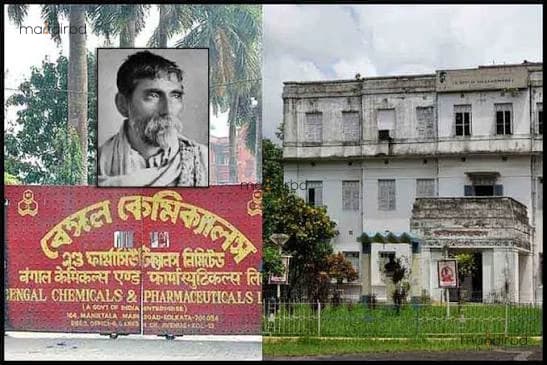
The Swadeshi Spirit & The Rise of Bengal Chemicals
Acharya Prafulla Chandra Ray’s Swadeshi vision and the founding of Bengal Chemicals as a pillar of economic nationalism
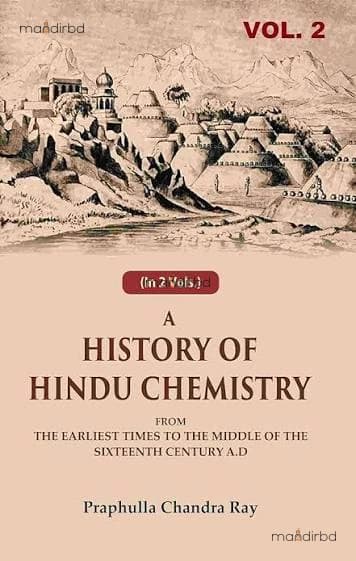
Revival of Ancient Hindu Chemistry & Foundation of Modern Indian Science
Acharya Prafulla Chandra Ray, the Father of Indian Chemistry, founded Bengal Chemicals and pioneered the Swadeshi industrial movement. Through his monumental two-volume work, 'A History of Hindu Chemistry' (1902, 1909), he scientifically validated the advanced alchemical and metallurgical knowledge of ancient Vedic, Ayurvedic, and Tantric sages, firmly establishing India's glorious scientific heritage on the global stage.