Revival of Ancient Hindu Chemistry & Foundation of Modern Indian Science
Historical Significance
A History of Hindu Chemistry: The Scientific Legacy of Ancient Bharat
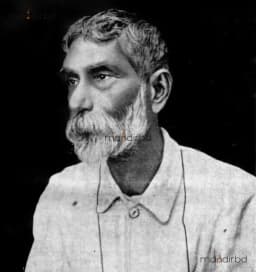
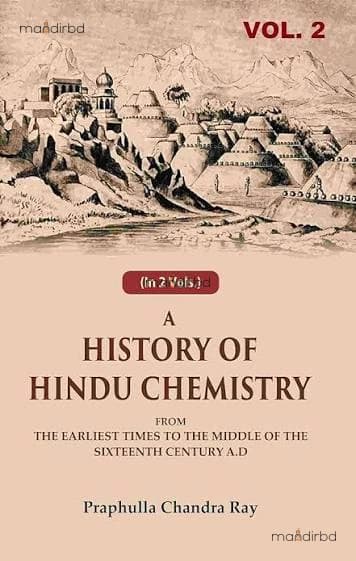
When we look back at the grand tapestry of human civilization, modern history often attributes the birth of empirical science to the Western world. However, hidden within the sacred Sanskrit verses of ancient Bharat lies a deeply empirical, rigorous, and highly advanced scientific tradition. This lost glory was painstakingly resurrected by Acharya Prafulla Chandra Ray in his monumental two-volume masterpiece, "A History of Hindu Chemistry" (Volume 1 in 1902, Volume 2 in 1909).
As a modern engineer dealing with complex systems, I often marvel at the material science of our ancestors. Acharya Ray’s work is not merely a historical account; it is a profound philosophical statement and an indisputable proof that the ancient Sanatani sages were pioneer scientists, metallurgists, and chemists.
The Genesis of a Masterpiece
The inspiration for this herculean task was sparked by a correspondence with the renowned French chemist Marcellin Berthelot. After reading Berthelot's works on Greek and Arabic alchemy, Acharya Ray realized that the rich alchemical heritage of India was entirely unknown to the global scientific community.
Determined to bridge this massive gap, Acharya Ray embarked on a grueling journey. He scoured ancient monasteries, libraries, and personal collections across the subcontinent to unearth decaying, worm-eaten Sanskrit manuscripts.
Combining his profound mastery of the Sanskrit language with his rigorous training as a modern experimental chemist, he decoded cryptic verses that had remained untouched for centuries. He successfully translated the poetic, often mystical language of the Tantras and Vedas into modern chemical terminology.
The Chronological Evolution of Hindu Chemistry
Acharya Ray brilliantly structured the history of Indian chemistry into four distinct, scientifically evolutionary periods. This classification remains the gold standard for historians of science today.
1. The Ayurvedic Period (From Pre-Vedic Antiquity to ~800 AD)
This period highlights the integration of chemistry with medicine. The Rigveda and Atharvaveda contain early references to the medicinal properties of plants and the rudimentary use of metals.
The profound texts of this era, namely the Charaka Samhita and Sushruta Samhita, showcase a highly developed understanding of the preparation of alkalis (Kshara), metallic salts, and the calcination of metals.
Sushruta, the ancient surgeon, detailed the exact chemical processes for creating caustic alkalis from plant ashes, demonstrating a clear understanding of pH and chemical neutralization centuries before the West.
2. The Transitional Period (800 AD – 1100 AD)
During this phase, chemistry began to separate from traditional medicine and evolved into an independent discipline of material science.
The prominent figure of this era was Vrinda and Chakrapani Datta, who introduced the use of metallic preparations—especially mercury and iron—in therapeutics. The foundation for iatro-chemistry (the use of chemical compounds for medical treatment) was firmly laid down during this crucial window.
3. The Tantric Period (1100 AD – 1300 AD)
Often misunderstood as mere occultism, the Tantric period was actually the golden age of experimental Indian alchemy (Rasavidya).
Acharya Ray extensively analyzed texts like Nagarjuna's Rasaratnakara and Rasarnava. He demonstrated that the Tantric alchemists were obsessed with the perfection of the human body through the use of processed mercury (Parada) and sulfur (Gandhaka).
While they sought the elixir of immortality, their practical experiments led to the discovery of red sulphide of mercury, black sulphide of mercury, and various complex extraction processes for zinc, copper, and lead.
4. The Iatro-Chemical Period (1300 AD – 1550 AD)
This era marked the peak of metallic medicine in India. Elaborate chemical treatises like Rasaratna Samuccayawere compiled, documenting a highly organized system of laboratory practices.
The texts from this period categorize chemical substances into Maharasas, Uparasas, and Dhatus (metals). They provided exact stoichometric ratios for complex chemical reactions that are remarkably accurate even by today's standards.
The Advanced Laboratory Apparatus (Yantras)
One of the most fascinating aspects of Acharya Ray's book is his detailed illustration of ancient Indian chemical laboratories (Rasashalas). He proved that our ancestors were not merely theoretical philosophers; they were hands-on engineers.
Dolayantra: Used for the continuous steaming and purification of medicinal substances.
Valukayantra (Sand Bath): A highly sophisticated apparatus used to maintain a slow, steady, and uniform temperature for prolonged chemical reactions, crucial for the safe processing of volatile substances like mercury.
Tiryak Patana Yantra (Distillation Apparatus): Evidence of advanced distillation techniques used for capturing essential oils, acids, and purified metallic essences.
Crucibles (Mushas): The texts describe over a dozen different types of crucibles made from specialized refractory clays, designed to withstand extreme furnace temperatures required for smelting tough ores.
The Decline of Scientific Inquiry in Ancient India
Acharya Prafulla Chandra Ray did not just glorify the past; he critically analyzed its downfall. With deep epistemic honesty, he addressed why this glorious scientific tradition eventually stagnated.
He boldly pointed out that the rigid enforcement of the caste system created a catastrophic divide in Hindu society. The intellect (represented by the Brahmins) completely divorced itself from manual labor and empirical experimentation (represented by the artisans and lower castes).
When touching a corpse or handling chemical furnaces was deemed impure by the elite scholars, the spirit of inquiry died. Science was reduced to theoretical debates, while practical technology languished in the hands of uneducated artisans who lacked access to formal theoretical knowledge.
Conclusion: A Legacy of Cultural and Scientific Resurgence
"A History of Hindu Chemistry" is a profound testament to the intellectual vigor of Sanatan Dharma. Acharya Prafulla Chandra Ray gifted the modern Indian mind a reason to stand tall. He proved that the roots of modern chemistry run deep within the soil of Bharat. For anyone passionate about the intersection of ancient wisdom and modern science, this book remains an essential, awe-inspiring pilgrimage into our magnificent past.