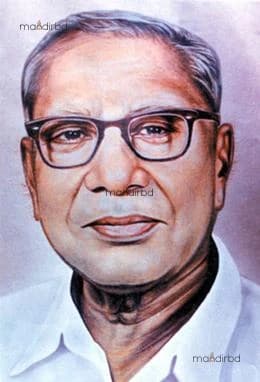
Ranada Prasad Saha
(রণদাপ্রসাদ সাহা)
Biography
Ranada Prasad Saha, widely and reverently known as R. P. Saha, was an eminent businessman, social reformer, and one of the greatest philanthropists of Bengal in the twentieth century. Born on November 15, 1896, in the village of Mirzapur under Tangail district, his life journey from a humble and struggling background to a legendary industrialist and humanitarian remains one of the most inspiring chapters in the history of Bangladesh. His father was Devendra Nath Saha and his mother was Kumudini Devi. At the tender age of seven, Ranada Prasad lost his mother, who died of tetanus due to a lack of proper medical treatment and awareness. This tragic loss deeply scarred young Ranada and planted the seeds of a lifelong mission to provide healthcare and education to the poor, especially women. Following his mother's death, he faced severe hardships and eventually ran away to Kolkata at a young age. His early life in Kolkata was marked by extreme poverty and struggle, where he worked as a day laborer, domestic help, rickshaw puller, and hawker to survive. Despite these hardships, his resilient spirit led him to join the Bengal Ambulance Corps during World War I in 1915. He served with distinction in Mesopotamia (modern-day Iraq), where he saved several officers from a devastating fire, earning him a temporary commission in the Indian Army and appreciation from the British government. Upon returning to civilian life after the war, Ranada Prasad entered the business world. He started with a small coal business and gradually expanded into the shipping industry, establishing the Bengal River Service. His sharp business acumen, honesty, and hard work paid off, and he soon became one of the wealthiest merchants and industrialists in Bengal. However, unlike contemporary capitalists, R. P. Saha did not accumulate wealth for personal luxury. He strongly believed that wealth belonged to society and should be used for the welfare of the underprivileged. In 1947, he formally established the Kumudini Welfare Trust, naming it after his beloved mother, and transferred all his business profits and properties to this trust for charitable activities. His most notable contribution was the establishment of the Kumudini Hospital in Mirzapur, which started as a small dispensary in 1938 and grew into a fully-fledged, 750-bed modern hospital in 1944, providing free medical treatment, medicine, and food to thousands of poor patients. Recognizing the importance of female education and empowerment, he founded Bharateswari Homes in 1945, a pioneering residential school for girls known for its discipline and holistic education. He also established the Kumudini Girls' College in Tangail and Devendra College in Manikganj, named after his father. During the Bangladesh Liberation War in 1971, R. P. Saha chose to remain in the country, continuing his humanitarian work and providing shelter and medical aid to those fleeing violence. His popularity and patriotic stance drew the ire of the Pakistani occupation forces and their local collaborators. On May 7, 1971, Ranada Prasad Saha and his young son, Bhavani Prasad Saha, were abducted from their residence by the Pakistani military and Al-Badr forces. They were never seen again and are believed to have been martyred on that very night. In recognition of his outstanding contributions to society and the nation, the Government of Bangladesh posthumously awarded him the Independence Day Award, the highest civilian honor. His legacy survives through the Kumudini Welfare Trust, which continues to serve millions in healthcare and education, keeping his spirit of selflessness alive.
References & Learn More
Notable Contributions
No linked contributions found in the database.


