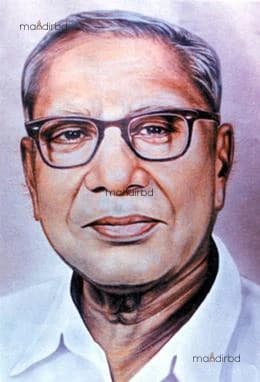
Farmer-scientist Haripada Kapali
(হরিপদ কাপালী)
Biography
Haripada Kapali was a pioneering peasant scientist from Bangladesh who, despite lacking formal education in agricultural science, invented a highly resilient and high-yielding rice variety through sheer empirical observation.
Early Life: Kapali was born on September 17, 1922, into a humble Sanatani family in Enayetpur village, Jhenaidah. His parents, Kunjalal Kapali and Sarodhani, passed away when he was an infant. Orphaned and destitute, he worked as a farmhand to survive before eventually marrying Suniti Biswas and settling in Asannagar village.
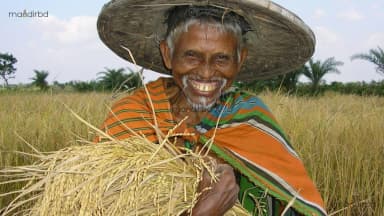
Discovery of Hari Dhan: Around 1992, while tending to his IRRI rice field, Kapali noticed a distinct, exceptionally robust rice plant with a remarkably higher number of grains. Relying on his practical wisdom, he isolated the plant, preserved its seeds, and cultivated them over the next few seasons, achieving unprecedented yields.
Impact and Characteristics: This newly discovered variant proved to be highly tolerant of pests, droughts, and heavy rainfall. Recognizing its immense potential, local farmers rapidly adopted the seeds. The Bangladesh Rice Research Institute subsequently analyzed and officially approved the variety, naming it 'Hari Dhan' (Hari's Rice) in his honor.
Legacy & Passing: Kapali's grassroots contribution to national food security earned him numerous accolades, and his story was incorporated into the national agriculture curriculum for secondary schools. He passed away on July 6, 2017, at the age of 94, leaving behind a lasting legacy of agricultural innovation.
References & Learn More
The biography of Haripada Kapali, the discoverer of Hari Dhana.
That Hari-dhan variety was discovered by Haripada Kapali.
Notable Contributions
No linked contributions found in the database.