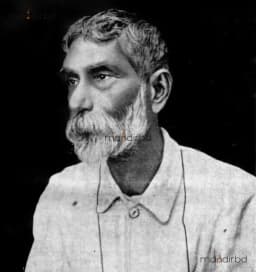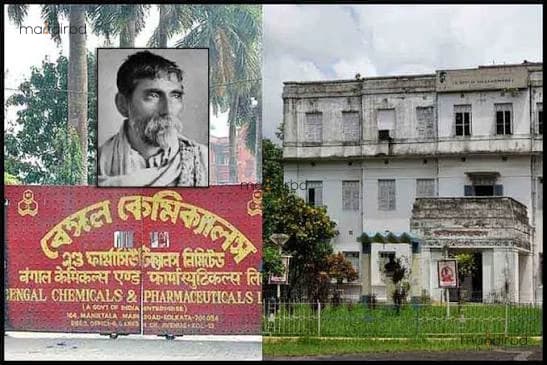
The Swadeshi Spirit & The Rise of Bengal Chemicals
Historical Significance
The Genesis of Economic Nationalism
To understand the contribution of Acharya Prafulla Chandra Ray to the Swadeshi movement, one must first look at the grim economic reality of colonial India at the turn of the 20th century. India was not just a political colony; it was an economic laboratory for the British. The "Drain of Wealth" theory, popularized by Dadabhai Naoroji, was not just a concept—it was a daily reality. The British imported raw materials from India at dirt-cheap prices and exported finished goods back to the Indian market at exorbitant rates, systematically destroying indigenous industries.
Acharya Prafulla Chandra Ray (P.C. Ray), a brilliant chemist who returned to India after earning his D.Sc. from the University of Edinburgh, saw this not just as a political tragedy but as a failure of the indigenous spirit. He believed that political independence was hollow without economic self-reliance. He argued that as long as Indians remained dependent on foreign goods, the nation could never be truly free. This realization was the bedrock of his involvement in the Swadeshi movement.
Bengal Chemicals: The Birth of a Vision
In 1892, with a meager capital of 700 rupees and a profound sense of purpose, P.C. Ray started preparing medicines in his own rented house. He did not have the machinery of a modern corporation; what he had was a chemist’s precision and a nationalist’s heart. He recognized that the patent medicines flooding the Indian market—mostly imported—were being sold at prices unaffordable for the common man.
His vision was two-fold:
Scientific Excellence: He wanted to prove that Indians were as capable of complex chemical research and production as the Europeans.
Affordability: He wanted to provide high-quality medicines at prices the average Indian could afford.
By 1901, his small venture was formally registered as 'Bengal Chemical and Pharmaceutical Works Ltd.' This was not merely a business entity; it was a laboratory of the Swadeshi movement. When the partition of Bengal was announced in 1905, the Swadeshi movement gained momentum. Bengal Chemicals became a symbol of resistance. P.C. Ray urged the Bengali youth to abandon the craze for government jobs and embrace industry. He famously said, "The Bengalis are not meant to be mere clerks; they have the intellect to be creators."
Science as a Weapon for Independence
The genius of P.C. Ray lay in his ability to connect laboratory research with the needs of the masses. He studied the indigenous Ayurvedic system and sought to modernize it with modern chemical methods. He successfully utilized local herbs and raw materials to manufacture quality drugs. This was the ultimate realization of Swadeshi—using local resources, local intellect, and local labor to create wealth within the nation.
He also famously pioneered the "Indian School of Chemistry," mentoring young minds like J.N. Mukherjee, J.C. Ghosh, and others. He didn't just build a company; he built a scientific ecosystem. Bengal Chemicals became a training ground for scientists, chemical engineers, and pharmacists. Many of the techniques developed at Bengal Chemicals were used to produce essential chemicals that were previously entirely imported.
The Philosophy of Austerity and Self-Reliance
P.C. Ray’s life itself was a testament to the Swadeshi ideal. Despite being the founder of a successful industrial house and a professor at the Presidency College, he lived in a sparse room at the University College of Science. He donated a vast majority of his salary, his corporate dividends, and his life savings to charity, educational trusts, and famine relief funds.
He taught the nation that the Swadeshi movement was not about boycotting foreign goods just for the sake of it, but about building something better. He proved that an Indian could lead an industrial revolution from the ground up, with no government backing, amidst a colonial administration that viewed every Indian enterprise with suspicion.
Legacy and Lessons for Today
Bengal Chemicals survived the ups and downs of history, but its true legacy is the path it paved for Indian entrepreneurship. It demonstrated that self-reliance (Atmanirbharata) is not a modern political buzzword; it is a historical necessity. P.C. Ray’s work reminds us that real power lies in indigenous innovation. When we produce our own technology, our own medicine, and our own goods, we do not just save money; we secure the nation's future.
For the modern Indian engineer or entrepreneur, the story of P.C. Ray is a guiding light. It challenges us to look beyond quick profits and focus on building value that lasts for generations. He showed us that science is not just for the lab; science is for the society.