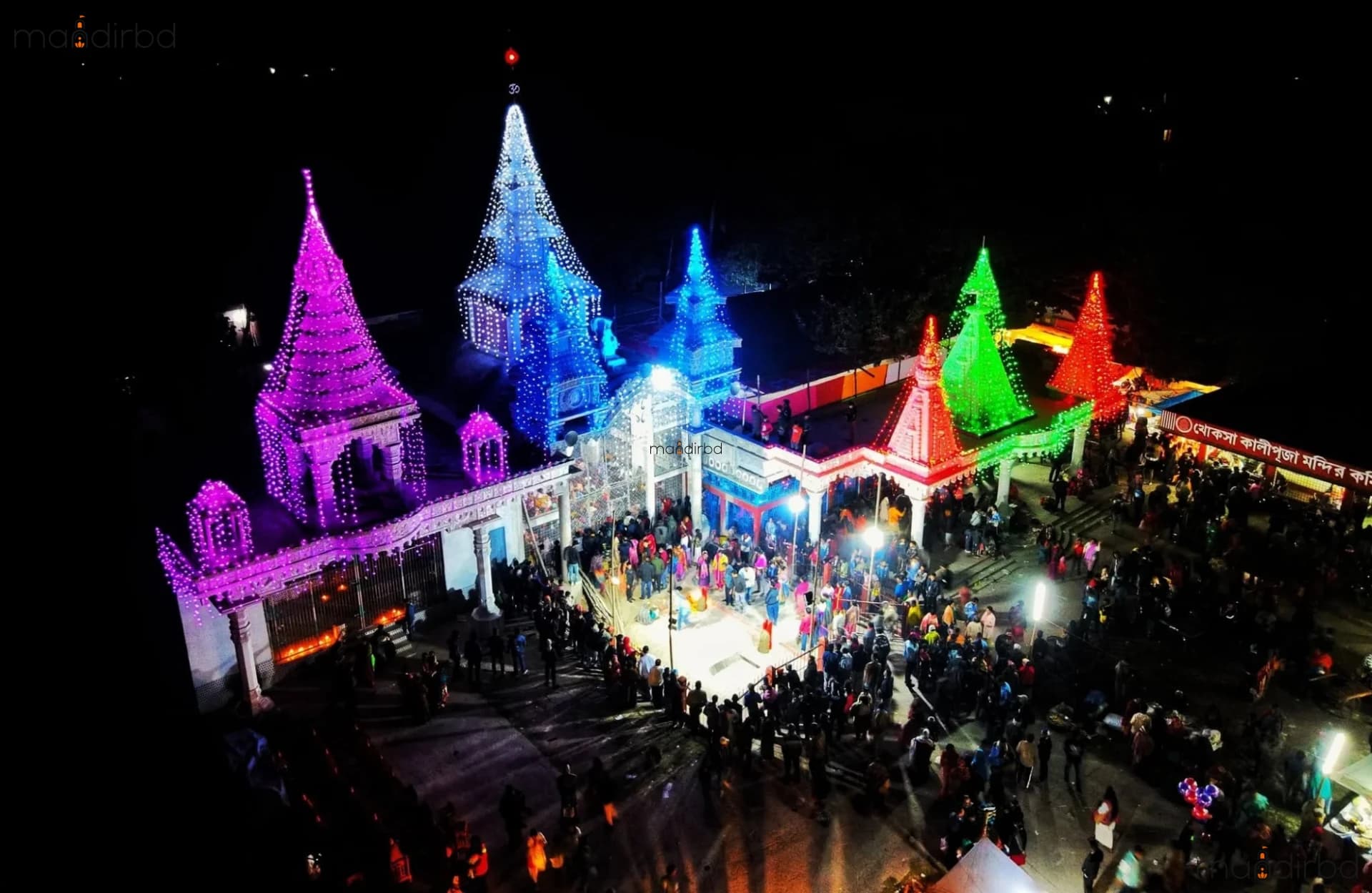
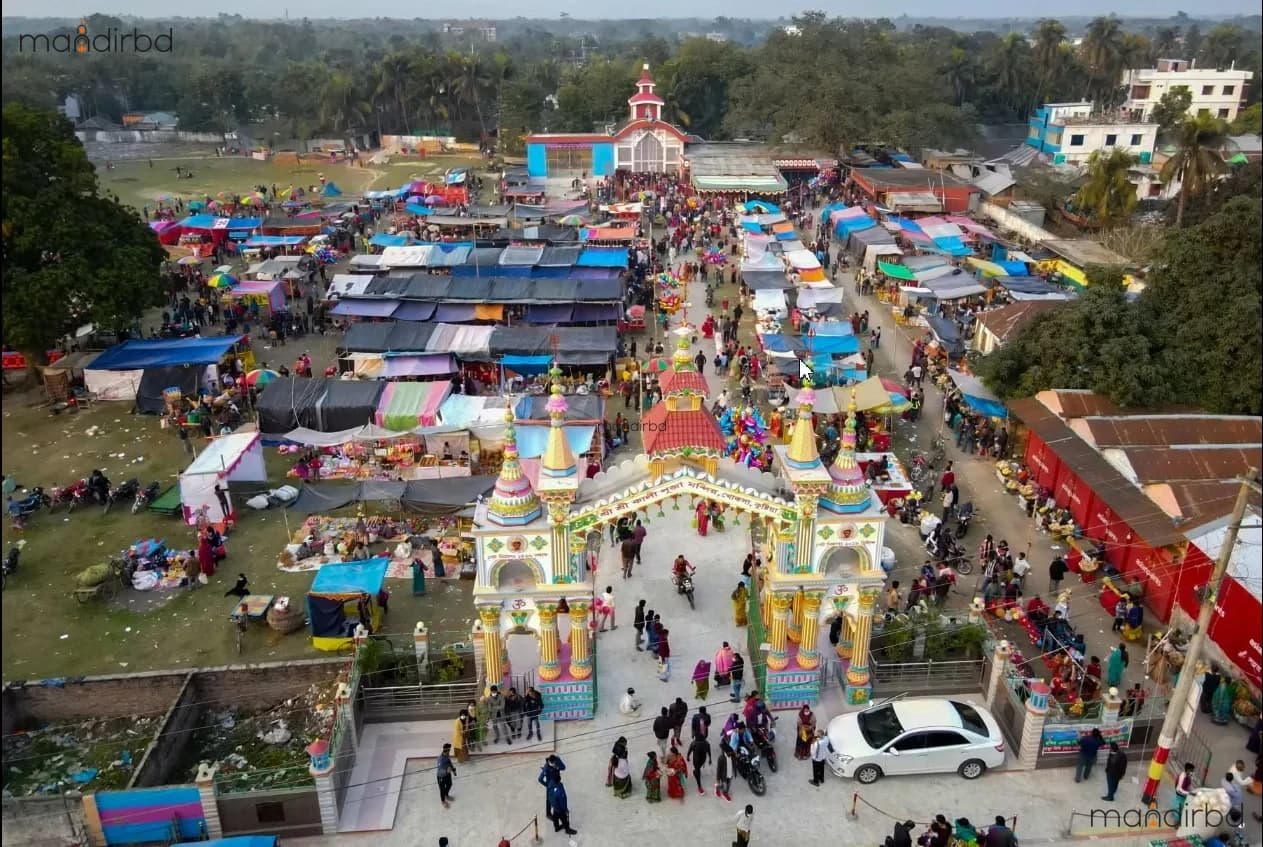
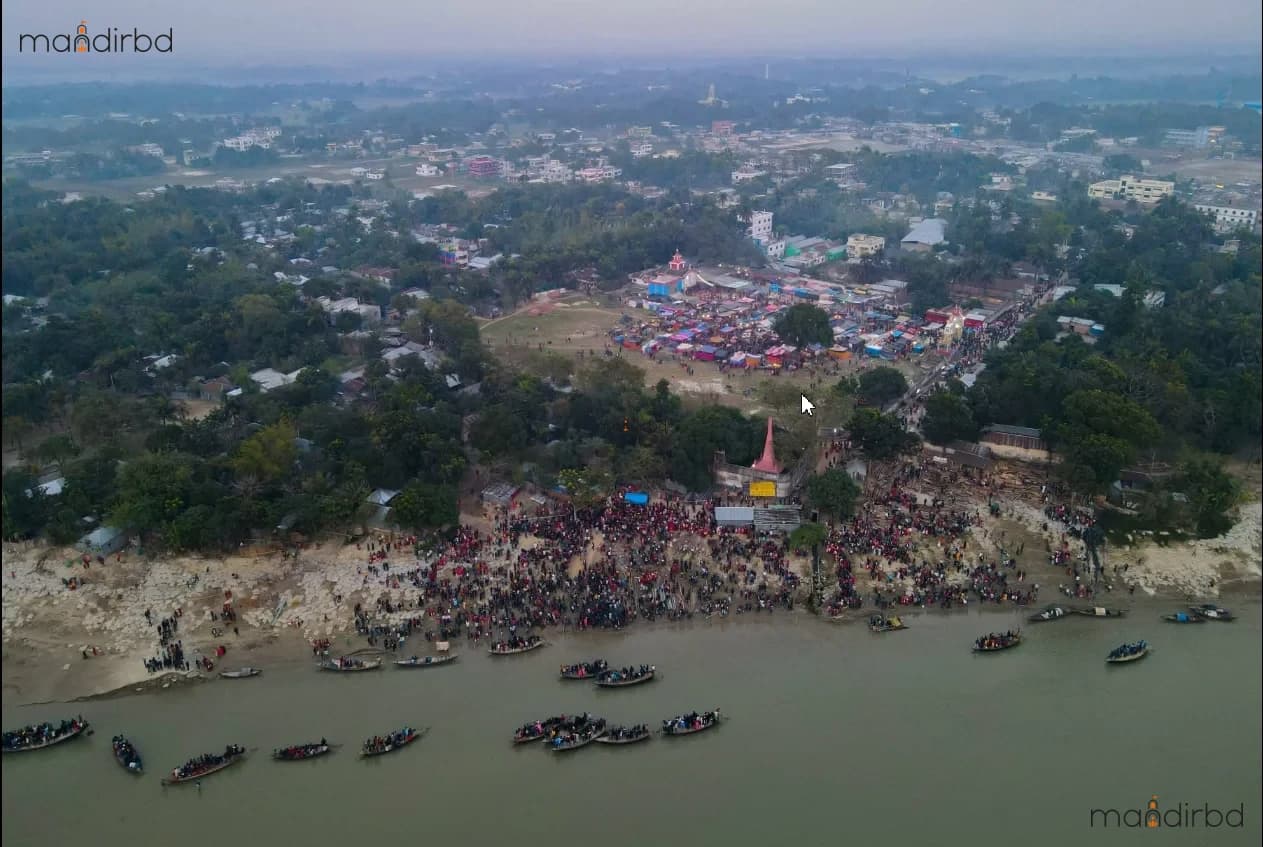
A traditional religious and scenic place in Khoksa Upazila of Kushtia. Located on the banks of the Gadai River beside Khoksa market in the Kalibari Mahalla of Khoksa Municipality, Kushtia District, this Mandir is a well‑known religious site among local Sanatan followers. The Mandir’s special attraction is its traditional Kali Puja. On the occasion of Maghi Amavasya, a special Puja and a traditional fair are organized here. For those who love learning about religious sites, local history and culture, Khoksa Kalibari can be an interesting place.
Before you visit
About
History
The Historic Khoksa Kali Puja Temple of Kushtia District:
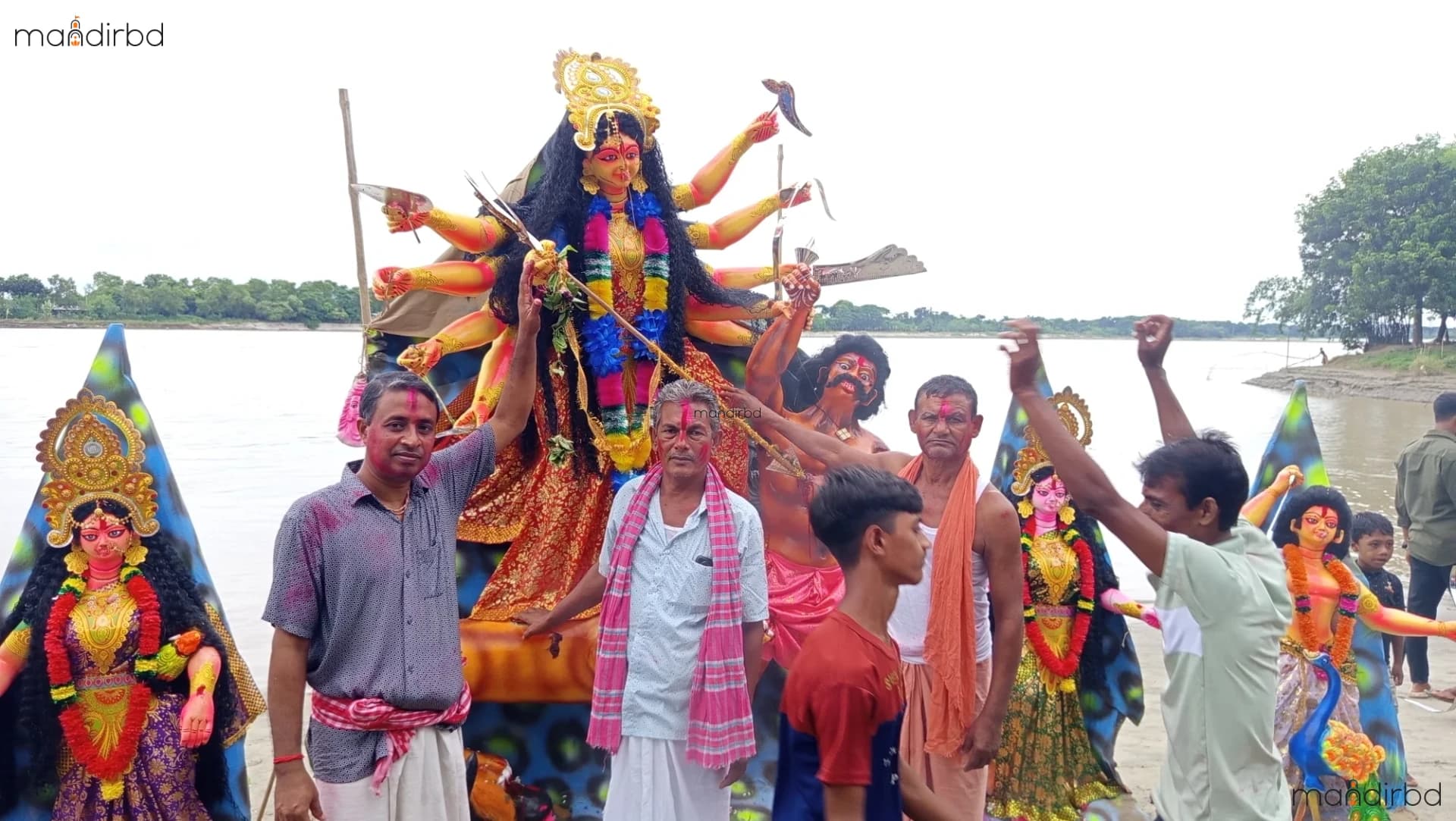
Every year, at the dead of night, the 550-year-old traditional Kali Puja and fair commence with the sacrifice of buffaloes and goats. Centered around this universal festival for the Hindu community of the subcontinent,elaborate arrangements are made. Ahead of this annual Kali Puja and fair in Khoksa—a site of Sanatani devotion and religious tourism for both the Hindu community and local residents free from caste discrimination—a unique festive spirit awakens among local people of all classes and professions. Beginning on the new moon (Amavasya) of the Bengali month of Poush, the crafting of a colossal 7.5-cubit (saare saat haat) tall idol of Goddess Kali starts with traditional rituals. The Puja Committee takes special initiatives to ensure the convenience of pilgrims and devotees arriving from home and abroad.
Kalibari, A Witness to Time: Surrounded by a pair of middle-aged banyan and pakur (fig) trees stands a temple—this is the daily worship temple. Kept inside is a black stone slab retrieved from the Garai River by Raja Indu Bhushan Deb Roy of Naldanga. It is an artifact from the Buddhist era. The structure of this stone slab closely resembles a four-legged wooden cot (chouki). This black stone slab is worshipped throughout the year. Also noteworthy is the seat (paat asan) for worshipping Lord Shiva, crafted from a brass sheet measuring 27 inches long and 4 feet wide. After the previous temple was washed away into the turbulent Garai River, the temple was relocated to its current site in the Bengali year 1341. Every year at the annual worship temple, on the lunar day (tithi) of Maghi Amavasya, a 7.5-cubit tall Kali idol—along with a 12.5-cubit tall Kali idol made of clay and straw—is immersed upon the conclusion of the annual worship. This puja has been observed on the exact same lunar day every year according to traditional customs. A month prior to Maghi Amavasya, a wooden frame made of Kadamba wood is constructed, and the annual worship is performed on the clay-and-straw idol built upon this frame. During the Zamindari era, the fair lasted for over a month; currently, the vibrant fair runs for one to two weeks.
The Origin of Buffalo and Goat Sacrifice: The custom of sacrificing buffaloes and goats began at the very auspicious moment of Khoksa Kali Puja’s inception. Previously, the number of sacrifices was not fixed. On the day of the annual puja, during the first watch (prahar) of the day, a single goat was sacrificed following the recitation of the Chandi. In the final watch of the day, after placing the Goddess upon her altar, five goats were sacrificed on behalf of the five co-sharers of the Ratan Babu Zamindar family of Narail, followed by the sacrifice of a buffalo sent by the Raja of Naldanga. Thereafter, a pair of goats was sacrificed in honor of the Shilaidaha Zamindari Estate. Sacrifices of goats brought by devotees to fulfill their vows (manat/manasha) continued until the Maghi Saptami puja and fair. This tradition of buffalo and goat sacrifice—symbolizing the offering of wrath/anger—continues to be practiced in the exact likeness of the royal and Zamindari era.Following the abolition of the royal and Zamindari systems, the reach and scale of the Khoksa Kali Puja and fair diminished significantly. After the temple established during the Nawabi era was swallowed by the continuous erosion of the turbulent Garai River in the Bengali year 1340, the Kali temple was newly rebuilt the following year, in 1341 BS, through the efforts of the local Hindu community.
The Inception of the Kali Puja: There is no exact recorded history of when the Khoksa Kali Puja first began; whatever exists is based entirely on estimation. However, it is widely held that Ramdeb Tarkalankar, the seventeenth ancestor of the current priest Sri Kala Krishna Bhattacharya, was the first priest of this puja. From this lineage, the age of Khoksa Kali Puja is estimated to be over 550 years. According to legend and popular folklore, the Kali of Khoksa was established by a certain Tantric ascetic (sadhak). Seeking no self-publicity, this Tantric saint began worshipping Kali in an uninhabited, dense jungle surrounded by a species of trees called Khoksa along the banks of the Garai River. When the son of a certain Zamindar was bitten by a snake, the unconscious young nobleman was brought to this ascetic for treatment. Laying the patient at the feet of Goddess Kali, the saint restored the Zamindar's son to health through his spiritual penance (sadhana). Upon hearing the news, the Zamindar was overwhelmed with devotion to Kali, and following the Tantric saint's instructions, constructed a 7.5-cubit tall idol of Kali and initiated the first Kali Puja here on the lunar day of Maghi Amavasya. Thus began the Khoksa Kali Puja. Following the buffalo sacrifice, a pair of goats used to be sacrificed in honor of Bhairabnath, the Zamindar of Pangsha, and the Tagore Zamindars of Shilaidaha.Continuing that legacy, sheep, goats, and subsequently buffaloes are still sacrificed here today, followed by the sacrifice of vow-offerings (manasha goats) brought by devotees from home and abroad.
The Grand Expansion of the Kali Puja and Fair: One day, when a renowned scholar—an ancestor of the current priest—was attacked by a colossal buffalo, the scholar hurled the Chandi scripture he was holding in his hand, slaying the buffalo. When this incident reached the ears of the Raja of Naldanga, he granted 1,400 bighas of rent-free land to the four co-sharers of this Brahmin family possessing miraculous spiritual power.Additionally, as service-tenure grants (chakrana), he donated 12 bighas of rent-free land each to the artisans who build the idol frame, washermen, barbers, garland-makers (malakar), sweepers (bhuimali), drummers (dhaki), and cleaners associated with this Kali Puja, along with 16 bighas of land to cover the seven-day expenses of the annual puja. Extensive renovation programs were undertaken by relocating the Kali Puja fair,though many plans remained unfulfilled dreams due to a lack of funds. After the current Puja Committee and local dignitaries assumed responsibility, the foundation stone for making the annual worship temple permanent (pucca) was laid on the new moon (Amavasya) of 28 Agrahayan, 1389 BS. Although a comprehensive program was adopted—including building a Sanskrit Chatushpathi (traditional academy) to teach poetry,grammar, logic (Nyaya), and scripture (Smriti), a religious library, a Shebayet (custodian) building for devotees arriving during daily and annual worship, and a boundary wall for the Kalibari—various persistent challenges meant that only the construction of the annual worship temple, the Sanskrit Chatushpathi building, and a rest house for visitors could be completed.
How to get there
1. How to Go by Bus
From Kushtia: Board a Khoksa-bound bus from the Kushtia Central Bus Terminal or Chourhash Mor.
From Rajbari: Take a Khoksa-bound bus and get off at the Khoksa Bus Stand.
From the bus stand: you can reach the temple by auto-rickshaw, van, or on foot.
2. How to Go by Train
Take a train operating on the Darshana–Goalanda railway route and get off at the Khoksa Railway Station.
From the station, you can reach the temple via a local auto-rickshaw or van.
Deities

Visitor Info
Entry Feefree
ParkingAvailable
ToiletAvailable
Drinking waterAvailable
AccommodationNot available
Photosyes
Shoe Storage
Wheelchair Access
Best Time to Visit8 AM–11 AM
- Visit the Mandir in a peaceful environment.
- Opportunity to perform Puja and prayers.
- Take beautiful photographs.
3 PM–5 PM
- Enjoy the Mandir's surroundings.
- Walk along the banks of the Gorai River.
- Take photographs in the afternoon light.
During the new moon of the month of Magh
- Annual Kali Puja.
- Traditional fair.
- Special Puja and festive atmosphere.
If visiting for the first time, go between 9 AM and 11 AM. You can enjoy the Puja atmosphere, the Mandir's architecture, and the beauty of the surrounding Gorai River.
Prasad
সন্ধ্যার আরতির পর।
Location & Map
Get Directions ↗Kalibari Mahalla, 4 No Ward, Khoksa Municipality, Khoksa, Kushtia., Khoksa Union, Khoksa, Kushtia
AreaKhoksa Union, Khoksa, Kushtia
Para/MohollaKalibari Mahalla, 4 No Ward, Khoksa Municipality, Khoksa, Kushtia.
NearA few hundred yards from Khoksa Bus Stand, on the banks of the Gorai River near Khoksa Market, Kalibari Mohalla, Khoksa, Kushtia.
Post Code7021
Plus CodeR73H+RCC, Khoksha
Know of an event at this temple?
Sign in to tell us about an event at this temple.
Gallery
Opinions
No answers yet
Ask about this →This profile is 90% complete
Help complete itInformation last updated Nov 16, 2026
Is this information accurate?
Become a Volunteer
Help us preserve our digital heritage. Join us by updating temple data, adding photos, or contributing to the panjika.
Location is required to confirm you are at or within 200 meters of this mandir before points are awarded.
Contribute as a Volunteer
Dedicated volunteer requests are handled inside the volunteer dashboard.
Deities
Contact Info
Phone01717861992
FacebookView Page
Opening hours
No opening hours added yet.
This temple in the app
Keep this temple with you and find it again in a tap.
- Save it and check in when you visit
- Aarti and prasad times at a glance
- Daily panjika and festival reminders

Visitor Info
Entry Feefree
ParkingAvailable
ToiletAvailable
Drinking waterAvailable
AccommodationNot available
Photosyes
Shoe Storage
Wheelchair Access
Best Time to Visit8 AM–11 AM
- Visit the Mandir in a peaceful environment.
- Opportunity to perform Puja and prayers.
- Take beautiful photographs.
3 PM–5 PM
- Enjoy the Mandir's surroundings.
- Walk along the banks of the Gorai River.
- Take photographs in the afternoon light.
During the new moon of the month of Magh
- Annual Kali Puja.
- Traditional fair.
- Special Puja and festive atmosphere.
If visiting for the first time, go between 9 AM and 11 AM. You can enjoy the Puja atmosphere, the Mandir's architecture, and the beauty of the surrounding Gorai River.
Prasad
সন্ধ্যার আরতির পর।
Location & Map
Get Directions ↗Kalibari Mahalla, 4 No Ward, Khoksa Municipality, Khoksa, Kushtia., Khoksa Union, Khoksa, Kushtia
Para/MohollaKalibari Mahalla, 4 No Ward, Khoksa Municipality, Khoksa, Kushtia.
NearA few hundred yards from Khoksa Bus Stand, on the banks of the Gorai River near Khoksa Market, Kalibari Mohalla, Khoksa, Kushtia.
Post Code7021
Plus CodeR73H+RCC, Khoksha
More temples in Kushtia district
Other temples with this name
- সেনগ্রাম কালীতলা কালী মন্দিরPangsha, Rajbari
- Atharo Khada Kalibattola Sarbojonin Katyayani Puja TempleMagura
- রাজবংশী পাড়া শ্রী শ্রী কালী মন্দির, দেলদুয়ারDelduar, Tangail
- Sri Sri Shmashan Kali Mata MandirMirzapur, Tangail
- Ulpur Sarbajanin Sri Sri Kali Mata MandirGopalganj
- Shekharnagar Shree Shree Maa Raksha Kali MandirMunshiganj
- Arya Dharmasava Kali MandirKhulna
- Gacha Das Bari Kali MondirGazipur
Frequently asked questions
Where is Khoksa Kalibari?
Khoksa Kalibari is at Kalibari Mahalla, 4 No Ward, Khoksa Municipality, Khoksa, Kushtia., Khoksa Union, Khoksa, Kushtia.
What is near Khoksa Kalibari?
The nearest landmark is A few hundred yards from Khoksa Bus Stand, on the banks of the Gorai River near Khoksa Market, Kalibari Mohalla, Khoksa, Kushtia..
Which deities are worshipped at Khoksa Kalibari?
Deities worshipped here: Kali.