
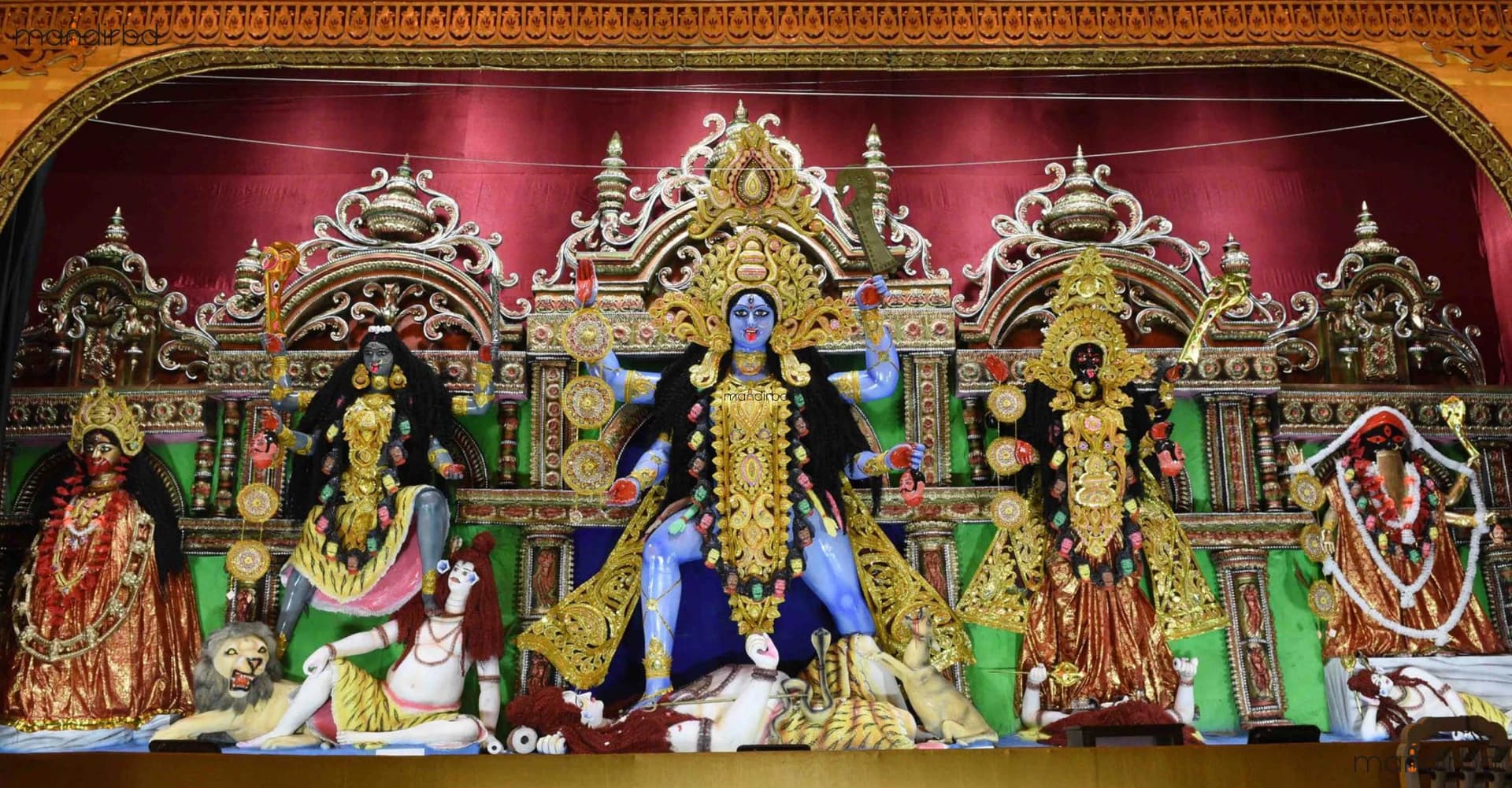
Goddess Kali is one of the most prominent and powerful deities in Hinduism, revered as the ultimate cosmic energy, Adi Parashakti, and the first of the ten Mahavidyas (wisdom goddesses). The name 'Kali' is derived from the Sanskrit word 'Kala', which signifies time, change, and darkness. As the goddess of time, she represents the inevitable destructive power that dissolves everything back into the unmanifested state. Her iconography is rich with profound spiritual symbolism. She is typically depicted with a dark blue or black complexion, representing the infinite, all-encompassing nature of the cosmos, much like the vast night sky. Her disheveled, free-flowing hair symbolizes absolute freedom and liberation from societal constraints and illusions. Kali is traditionally depicted with four arms: her upper left hand holds a blood-stained scimitar (Khadga), symbolizing the cutting of ego and ignorance, while her lower left hand holds a severed demon head, representing the destruction of the human ego. Her right hands display the Abhaya (fearlessness) and Varada (boon-giving) mudras, assuring her devotees of protection and spiritual liberation. She wears a garland of fifty severed heads, representing the fifty letters of the Sanskrit alphabet and the primordial sounds of creation. Her waistband of severed human arms signifies the surrender of all karma and actions to the divine. Kali is famously depicted standing with one foot on the chest of Lord Shiva, who lies inert beneath her. This powerful imagery symbolizes the dynamic aspect of nature (Prakriti or Shakti) operating upon the silent, inactive absolute consciousness (Purusha or Shiva). Without Shakti, Shiva is inert; without Shiva, Shakti is uncontrollable. Kali is not merely a goddess of destruction but a compassionate mother who destroys evil to protect her devotees and guide them toward ultimate liberation (Moksha). Her worship is highly significant in Tantra and Shaktism, with various forms like Dakshina Kali, Shamshana Kali, and Mahakali being venerated across India, especially during Kali Puja in Bengal.
At a glance
Identity
Weapon
Khadga, Trishula, Khatvanga, Pasha
Consort
Lord Shiva
Worship & rituals
Primary festival
Shyama Puja
Puja day
Amavasya
Sacred flower
Red Hibiscus
Sacred color
Crimson Red
Overview
Mythology
The mythology of Goddess Kali is primarily detailed in sacred Hindu scriptures such as the Devi Mahatmyam (also known as Durga Saptashati or Chandi). According to these texts, Kali emerged during a cosmic battle between the gods and demons. When the demon generals Chanda and Munda launched a fierce assault on Goddess Ambika (Durga), the goddess became immensely angry. From her furrowed brow, a dark and terrifying form manifested—Goddess Kali. Depicted with a dark complexion, sunken red eyes, and a lolling tongue, she wielded a sword and a noose. She swiftly defeated Chanda and Munda, presenting their severed heads to Ambika, who then bestowed upon her the title 'Chamunda'. The most famous mythological event involving Kali is the slaying of the demon Raktabija. Raktabija possessed a unique boon: whenever a drop of his blood touched the ground, an identical clone of him would instantly arise from the earth. This made him virtually invincible, causing great distress to the gods. To defeat him, Kali entered the battlefield. As she struck Raktabija, she stretched her tongue across the battlefield to catch and drink every drop of his blood before it could touch the ground. Simultaneously, she devoured his clones, eventually draining him completely and ending his terror. Following her victory, Kali was consumed by a wild, ecstatic dance of destruction (Tandava). Her steps shook the entire universe, threatening to dissolve creation. To pacify her and save the cosmos, Lord Shiva threw himself beneath her dancing feet. When Kali realized she had stepped on her husband, she stopped in shock and embarrassment, biting her tongue. This iconic moment represents the balance between the wild, untamed energy of nature (Shakti) and the stabilizing, pure consciousness of the universe (Shiva).
Mantra
Om Kreem Kaalyai Namah.
Dhyana Mantra:
Om Karaala-Vadanaam Ghoraam Mukta-Keshiim Catur-Bhujaam. Kaalikaam Dakshinaam Divyaam Munnda-Maalaa Vibhuushitaam.
Observances
Associated festivals
Related articles
Kali Puja and Diwali 2026: date and time in Bangladesh
Kali Puja and Diwali 2026 fall on Sunday, 21 Kartik 1433 by the panjika (8 November). Shyama Puja and Diwali (Dipavali) share the night, with the puja at midnight. The amavasya by both reckonings, nishita in Dhaka, Bhut Chaturdashi, the holiday and Bhai Phonta, all in Bangladesh time.
Read article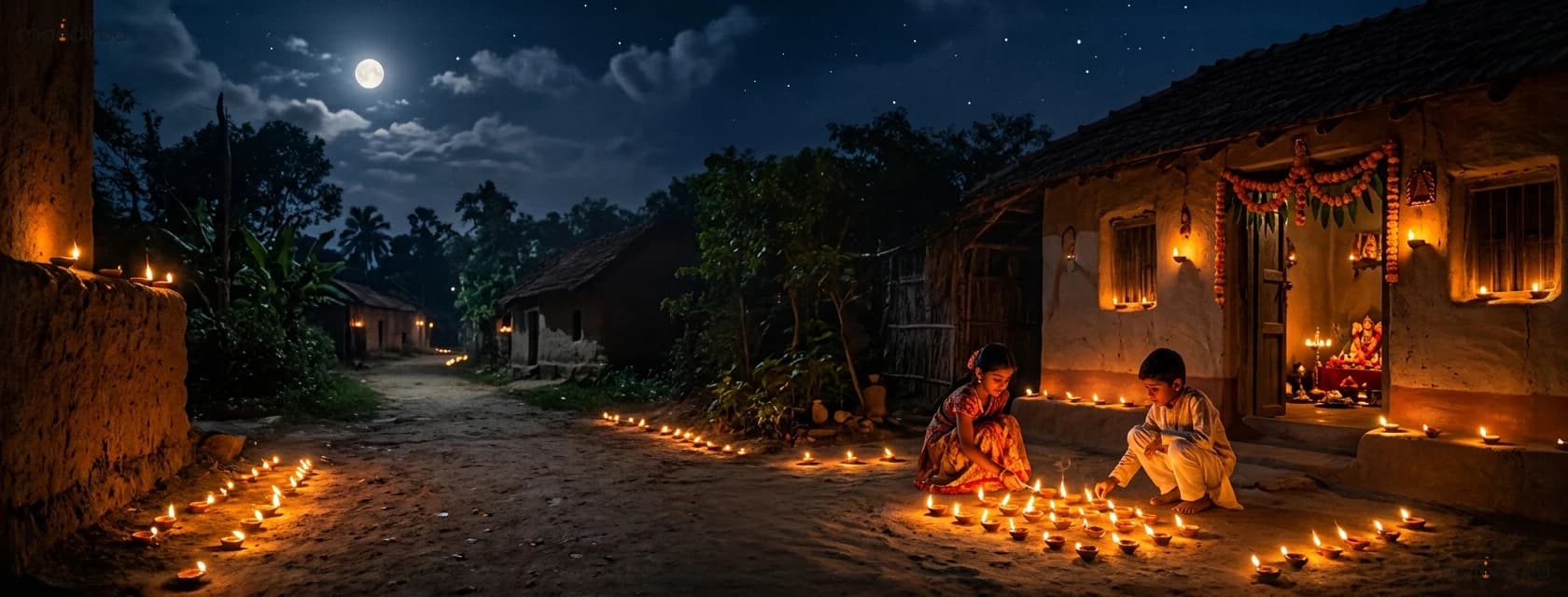
দীপান্বিতা লক্ষ্মী পূজা ও অলক্ষ্মী বিদায় ২০২৬: নিয়ম, সময় ও কারা করেন
দীপাবলির সন্ধ্যায় দীপান্বিতা লক্ষ্মী পূজা, তার আগে অলক্ষ্মী পূজা ও বিদায়। ২০২৬ সালে ২১ কার্তিক, রবিবার (৮ নভেম্বর), বিকেল ৫টা ২৩ মিনিট থেকে সন্ধ্যা ৬টা ৫৯ মিনিট। অলক্ষ্মী কে, বিদায়ের প্রচলিত নিয়ম, আর কারা এই পূজা করেন।
Read article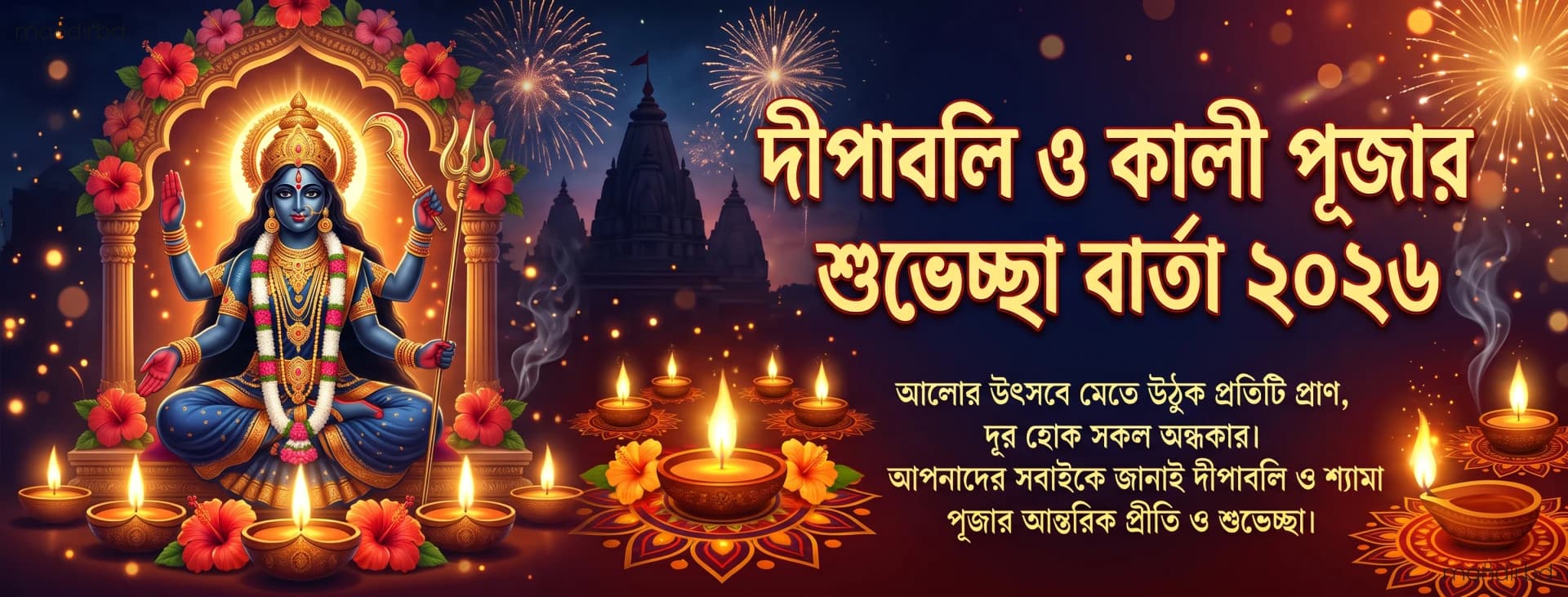
দীপাবলি ও কালী পূজার শুভেচ্ছা বার্তা ২০২৬: ক্যাপশন, স্ট্যাটাস ও ছোট বার্তা
শুভ দীপাবলি ও শ্যামা পূজার শুভেচ্ছা বার্তা: পরিবার, বন্ধু, প্রবাসী প্রিয়জন আর প্রয়াত স্বজনের স্মরণে ছোট বার্তা, ফেসবুক ক্যাপশন ও স্ট্যাটাস। সব মন্দিরবিডির নিজের লেখা, কপি করে পাঠান।
Read articleNo answers yet
Ask about this →Temple directory
Temples dedicated to Kali
Filter verified MandirBD temple profiles connected with Kali.
Search and filter
Uttar Chandra Das Para Universal Durga Temple
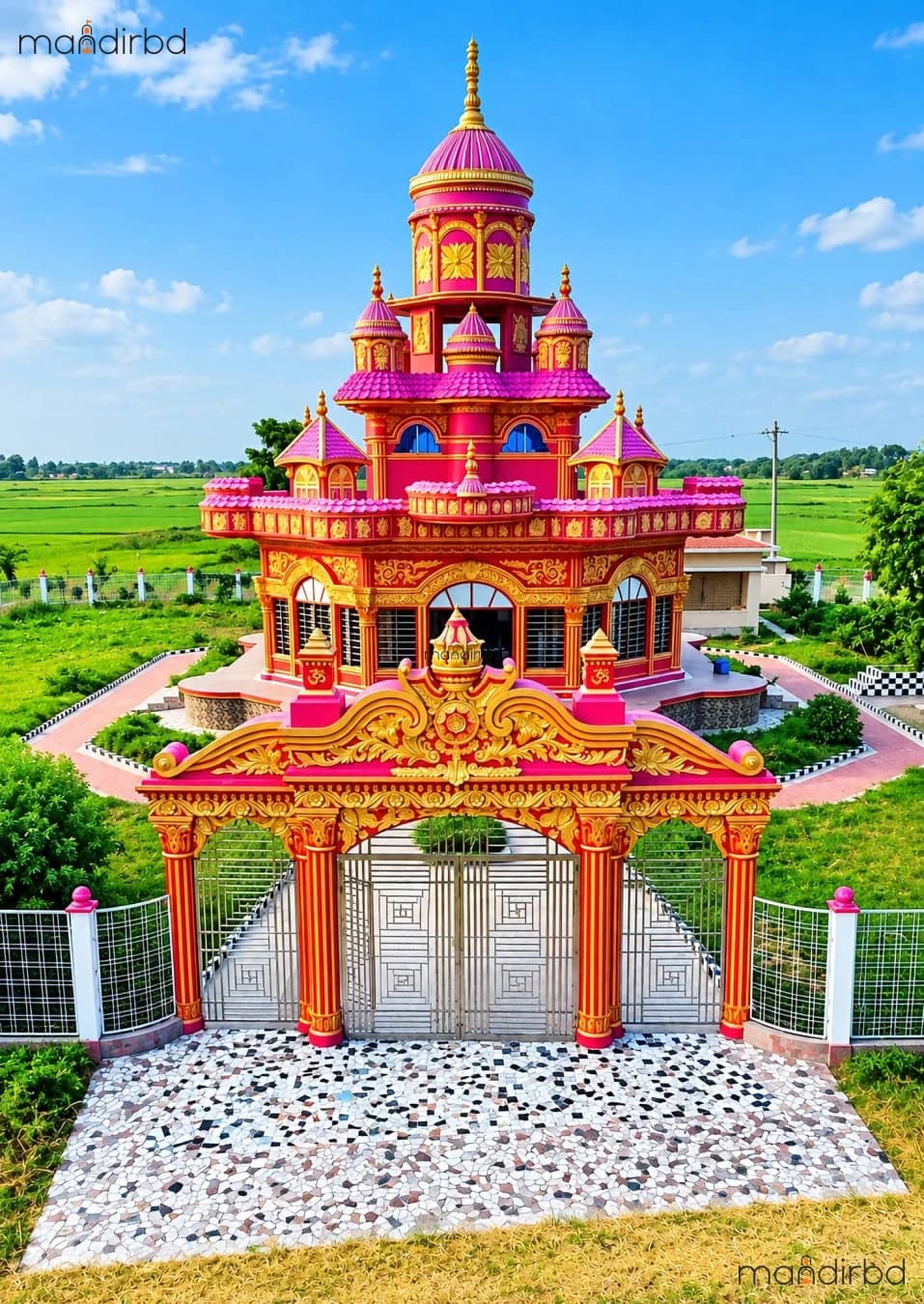
Ulpur Sarbajanin Sri Sri Kali Mata Mandir
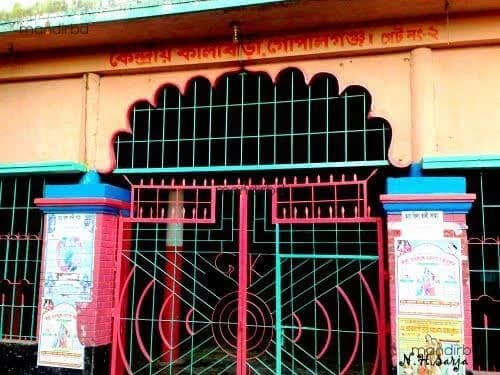
Gopalganj Central Kalibari
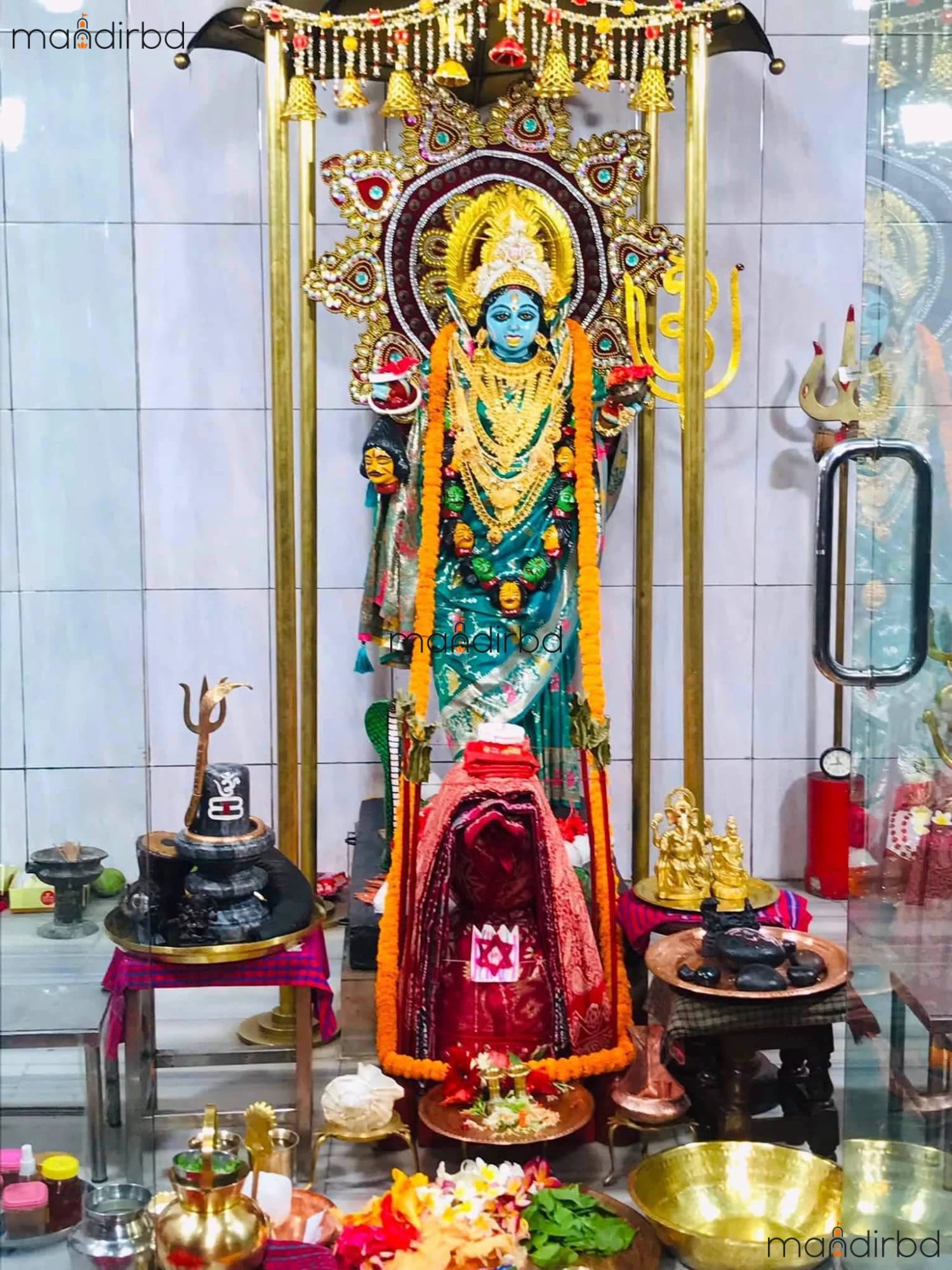
Golpahar Mahashmashan Kalibari
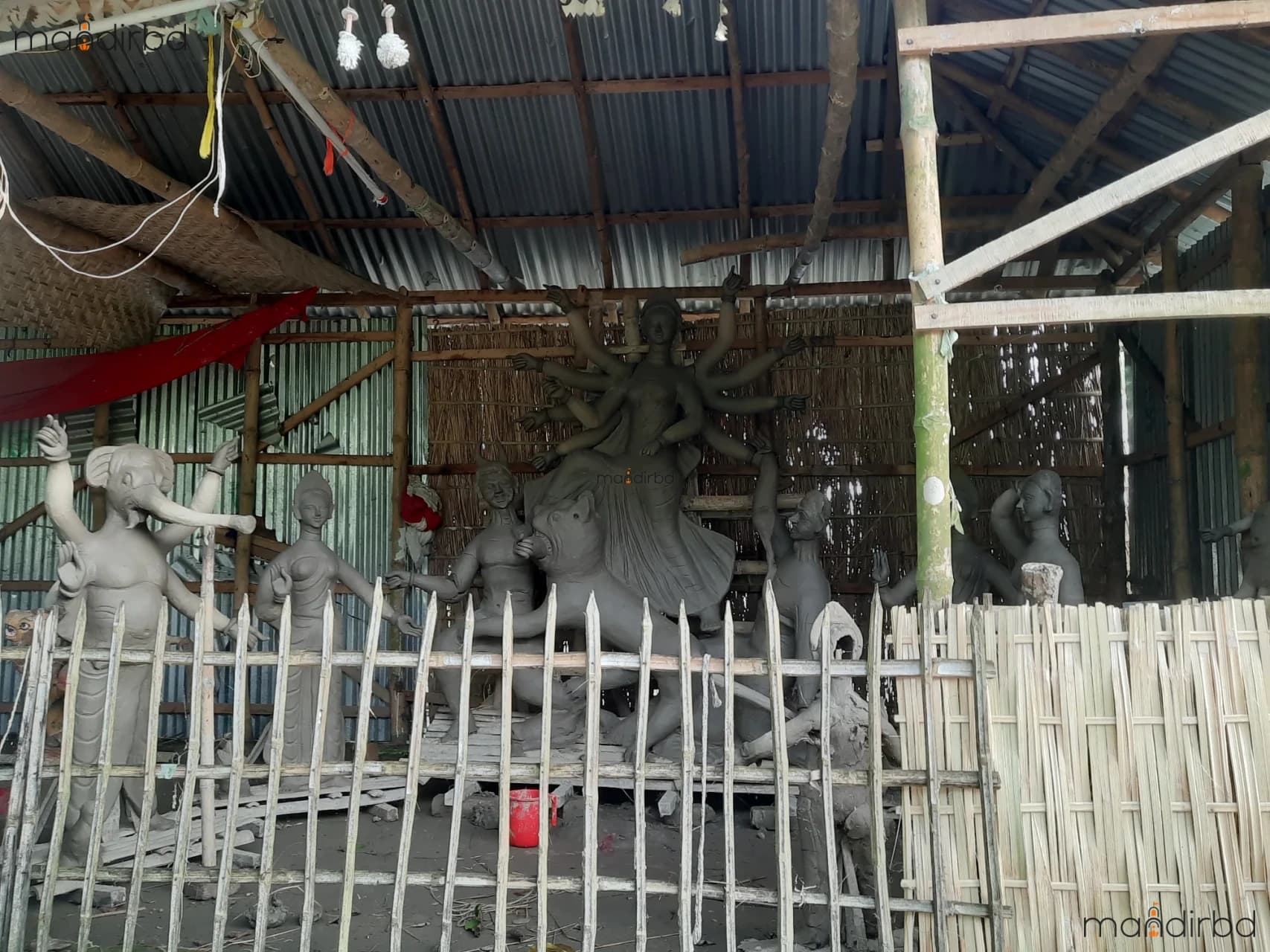
Ghorabandha Khatripara Kali and Durga Temple

Chandranath Temple
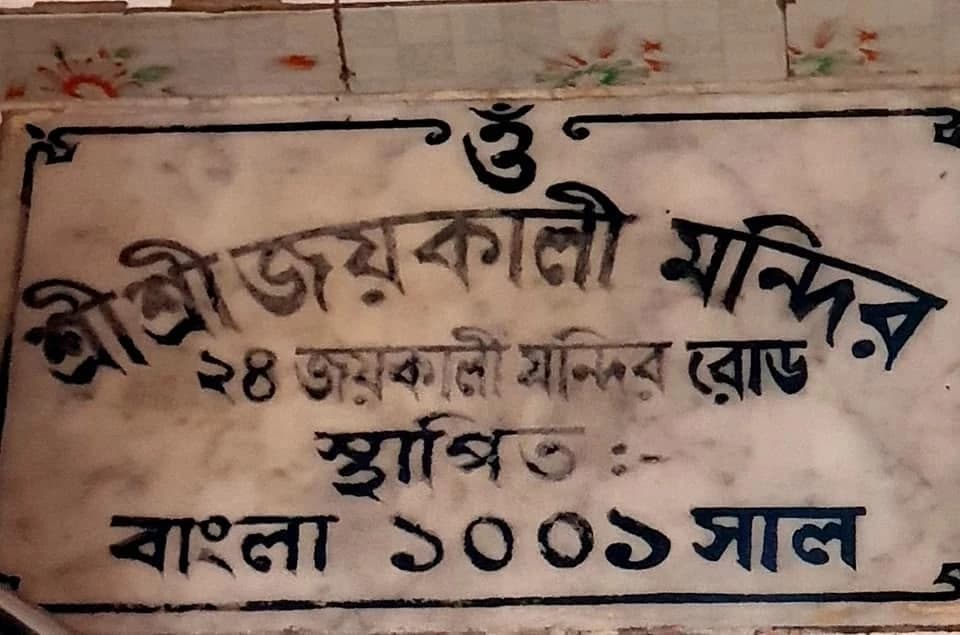
Joy Kali Mandir
Tepakhola Kalibari Sarbojonin Mandir
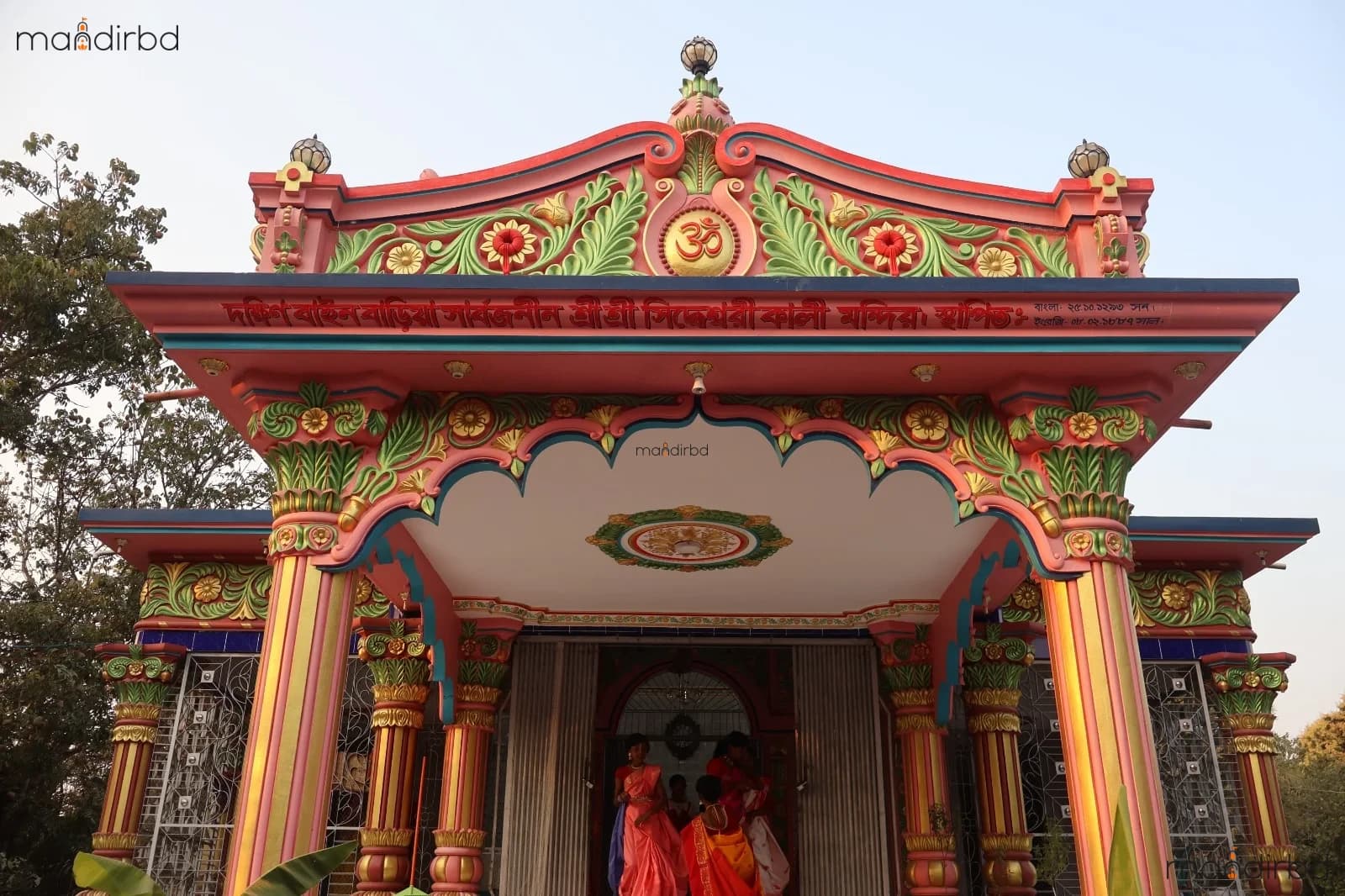
South Bain Baria Universal Shri Shri Siddeshwari Kali Temple

Dighirpar Sarbajanin Sri Sri Kali Temple
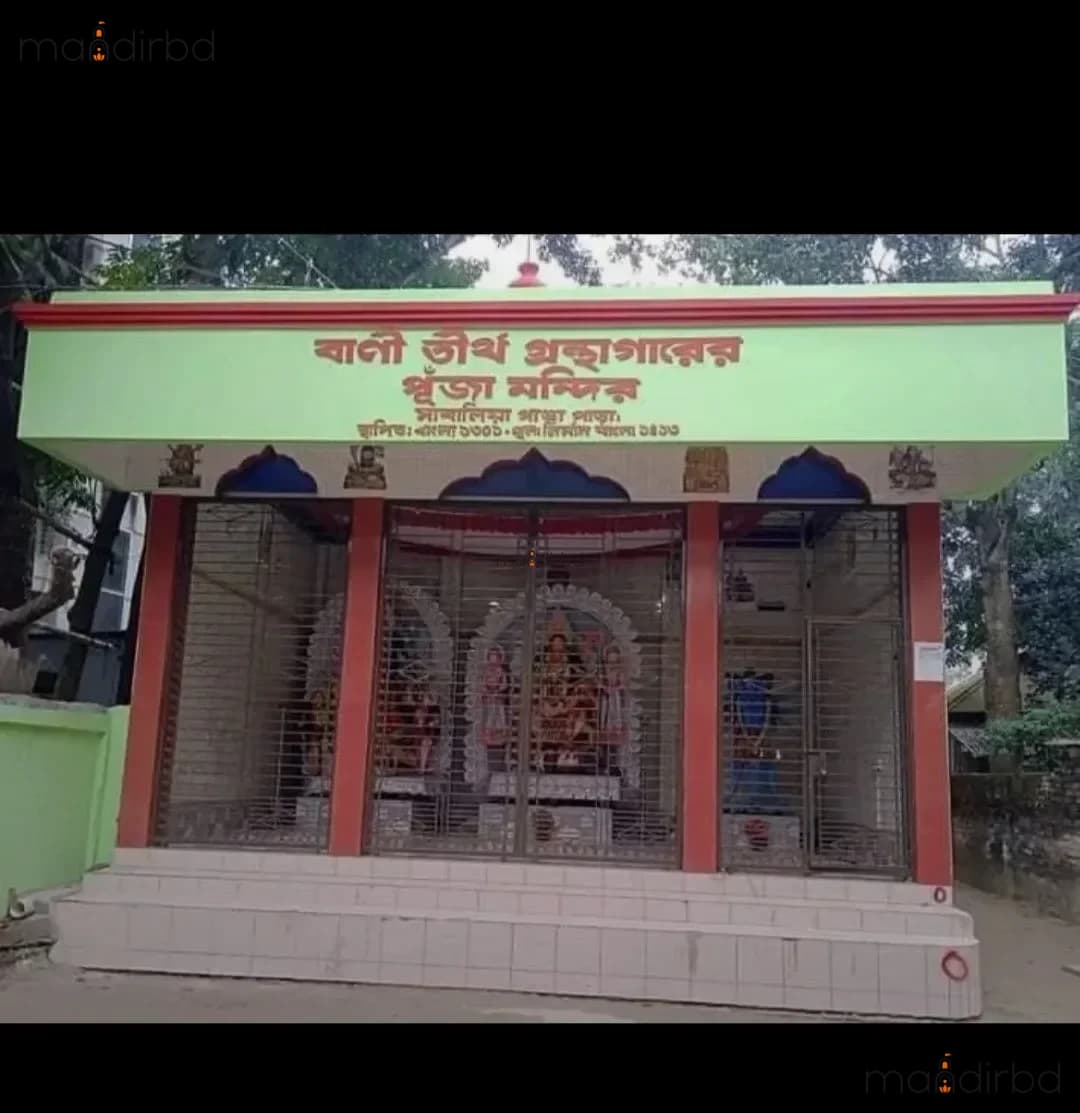
বাণী তীর্থ গ্রন্থাগারের পূজা মন্দির
