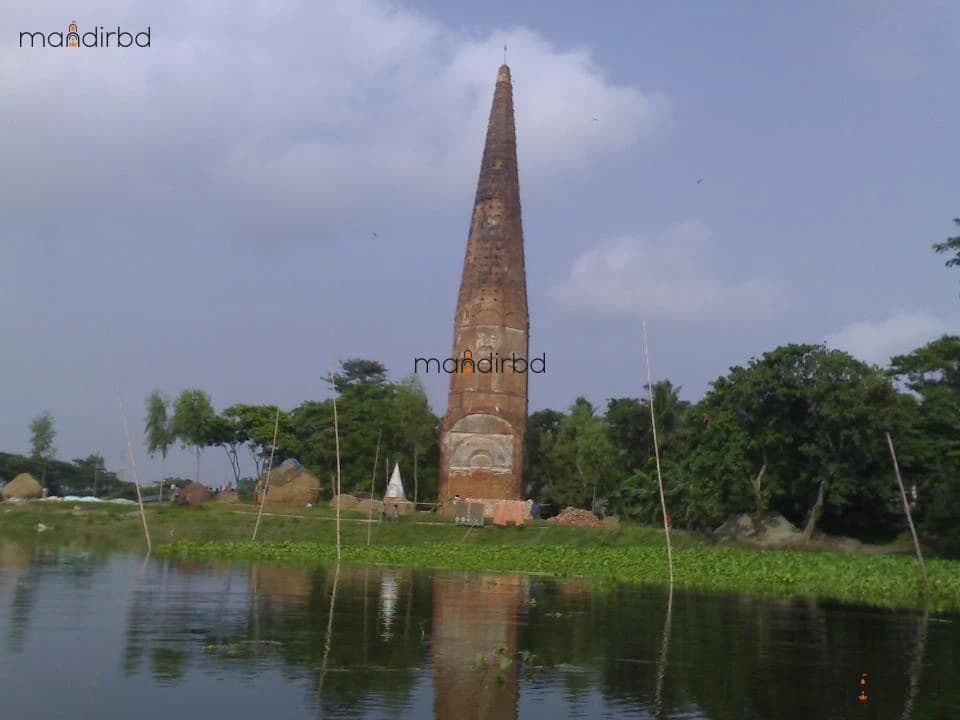
Geographical & Architectural Context: Shyamsiddhi Math is an extraordinary architectural marvel located in the historical region of Bikrampur, specifically in Shyamsiddhi village under Sreenagar upazila of Munshiganj district, Bangladesh. From an engineering and structural perspective, this monument stands as a phenomenal testament to the robust construction methodologies of the 19th century.
Record-Breaking Height: Reaching an astonishing height of approximately 241 feet, it is widely documented and considered the tallest Math (Hindu temple monument) in the entire Indian subcontinent. To put this into perspective, it famously surpasses the height of Delhi’s Qutub Minar, which stands at 236 feet, by a clear five feet.
Structural Dimensions & Materials: The structural blueprint of the math features an octagonal (some archaeological records classify the external bounding box as a 6-meter square) base, measuring 21 feet in both length and width. The foundational walls are incredibly thick, measuring around 1 meter in depth. It was built utilizing traditional "chun-surki" (a highly durable mortar made of slaked lime and powdered burnt clay). As an engineer, looking at the soft alluvial soil of the Bengal delta, achieving such sheer vertical load distribution without modern deep pile foundations or reinforced concrete is a masterclass in ancient civil engineering. The "chun-surki" bonding has provided immense shear strength against regular seismic activities for nearly two centuries.
Design Layout: The towering structure is systematically divided into three distinct vertical stages. The lower square part serves as the primary sanctum or main shrine (Garbhagriha). Its southern facade features a prominent entrance adorned with a pointed arch, which is aesthetically flanked by rectangular panels in plaster on either side.
Ecological Transformation: Today, the upper exterior walls are heavily perforated with hundreds of small crevices and holes. These hollowed sections have organically transformed into an ecological haven, housing hundreds of native bird species. It is predominantly occupied by green parrots (Tia) and crested mynas (Jhuti Shalik), keeping the monument vibrantly alive with their continuous chirping.
Current Risk Assessment: Despite its glorious past, lacking modern structural conservation efforts or retrofitting, the upper echelons of the math currently face severe risk. The heavy structural degradation implies that any high-magnitude earthquake could potentially cause a catastrophic failure of the top tiers.