According to verified traditional panjikas, hagiographies, and historical ashram chronicles, the venerated saint Baba Lokenath Brahmachari made his earthly appearance in 1730 CE (1137 BS) on the divine tithi of Krishna Janmashtami—the sacred eighth day of the waning moon in the Bengali month of Bhadra. He took birth in a devout Kasyapa gotra Brahmin family in the quiet village of Chaurasi Chakla, situated in the North 24 Parganas district of undivided Bengal. His father, Ramnarayan Ghoshal, had harbored a long-standing spiritual vow to consecrate one of his male children entirely to the ascetic life of God-realization, an aspiration joyfully realized when his mother, Kamaladevi, gave birth to their fourth son. In his tender childhood, alongside his lifelong companion Benimadhab Bandyopadhyay, Lokenath was entrusted to the revered Vedic scholar and tantric adept, Guru Bhagwan Ganguly. Under his strict spiritual tutelage, Lokenath renounced worldly attachments, embarking on over a century of profound austerities, rigorous Hathayoga, and continuous meditation across the freezing wilderness of the Himalayas.
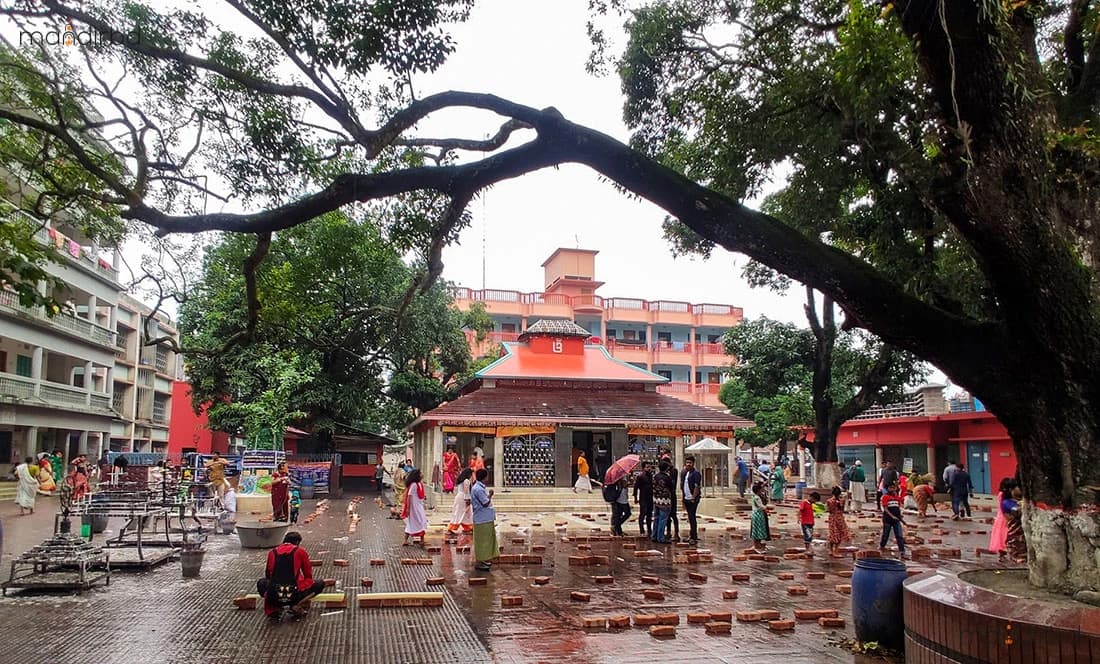
Baba Lokenath's Appearance Day
Last observed
Fri, September 4
About
Religious Significance
The spiritual significance of Baba Lokenath’s appearance tithi extends far beyond an ordinary commemorative observance; it stands as a sublime intersection of Shaivism and Vaishnavism within the Sanatan ethos. Devotees revere Baba Lokenath as an earthly manifestation of Lord Shiva, whose birth deliberately coincided with that of Lord Sri Krishna, thereby unifying two great streams of Indian spiritual wisdom into a singular path of divine grace. Having mastered Nirvikalpa Samadhi after enduring nearly a century of grueling yogic penance in severe Himalayan altitudes, Baba eventually walked among common people at Baradi, manifesting infinite compassion, healing, and guidance as an accessible spiritual father. On this sacred tithi, millions of seekers meditate upon his eternal declaration: "Whenever you are in danger, whether in war, forest, ocean, or jungle, remember me, I will protect you." The day thus serves as a beacon of inner strength, reinforcing the ideals of uncompromised truth, absolute sense control, and selfless humanitarian service.
Rituals & Observances
The liturgies and festivities of the appearance day commence in the early morning with elaborate abhishek and worship of Lord Shiva, honoring Baba’s identity as an incarnation of Mahadeva. The altar is adorned with white blooms, bilva leaves, tulsi manjaris, and specifically Baba's favorite aquatic blossom, the sacred blue water lily (neel shaluk). The ritual worship transitions through distinct stages, beginning with the morning balya bhog, which consists of pure sugar candy (mishri), palmyra pulp, black plums, and tender seasonal fruits, before advancing to the noon raj bhog, featuring wholesome sattvic preparations such as moong-dal khichdi, mixed vegetable stew (labra), and rice payasam. Throughout the day, shrines and household sanctums resonate with recitations of Baba Lokenath’s Panchali, Guru Vandana, and uninterrupted congregational chanting of the holy mantra: "Jai Baba Lokenath, Jai Brahma Lokenath, Jai Shiva Lokenath, Jai Guru Lokenath." At major spiritual centers like the historic Baradi Ashram in Bangladesh and Chakla Dham in West Bengal, daylong sacred havans, ecstatic Hariloot distribution, and massive open-kitchen prasadam distribution are conducted for multitudes of visiting pilgrims.
Fasting Rules
Because the advent of Baba Lokenath coincides with the sacred eighth tithi of Bhadra, the fasting regimen strictly adheres to the classical injunctions of the Sanatan Janmashtami Vrata. Devotees undertake a solemn spiritual vow prior to sunrise, completely abstaining from all grains, cereals, ordinary table salt, lentils, and cooked non-ritual foods for the entire day and night. Depending on physical endurance, the fast is maintained either as a rigorous nirjala vrata (absolute fasting without a single drop of water) or as a phalahari vrata, wherein only sanctified fruits, unboiled cow milk, and ritual water are consumed. The core fast culminates around midnight following the primary tithi rituals, where devotees honor Baba's charanamrita and blessed rock candy (mishri) to uphold their vow without consuming grains. The total fast formally concludes the following morning after sunrise, once the tithi officially elapses, through the ritual act of parana involving morning prayers, charity, and consumption of consecrated sattvic food, emphasizing disciplined sense control, non-violence, and unbroken contemplation above mere physiological deprivation.
When is Baba Lokenath's Appearance Day?
Where this festival is held
We don't know yet which temples observe Baba Lokenath's Appearance Day.
Know a temple that observes Baba Lokenath's Appearance Day?
No answers yet
Ask about this →Information
Type
Puja
Duration
1 days
Frequently Asked Questions
When is Baba Lokenath's Appearance Day?
Baba Lokenath's Appearance Day was last observed on Friday, September 4, 2026 (Ashtami).